
One shared reference
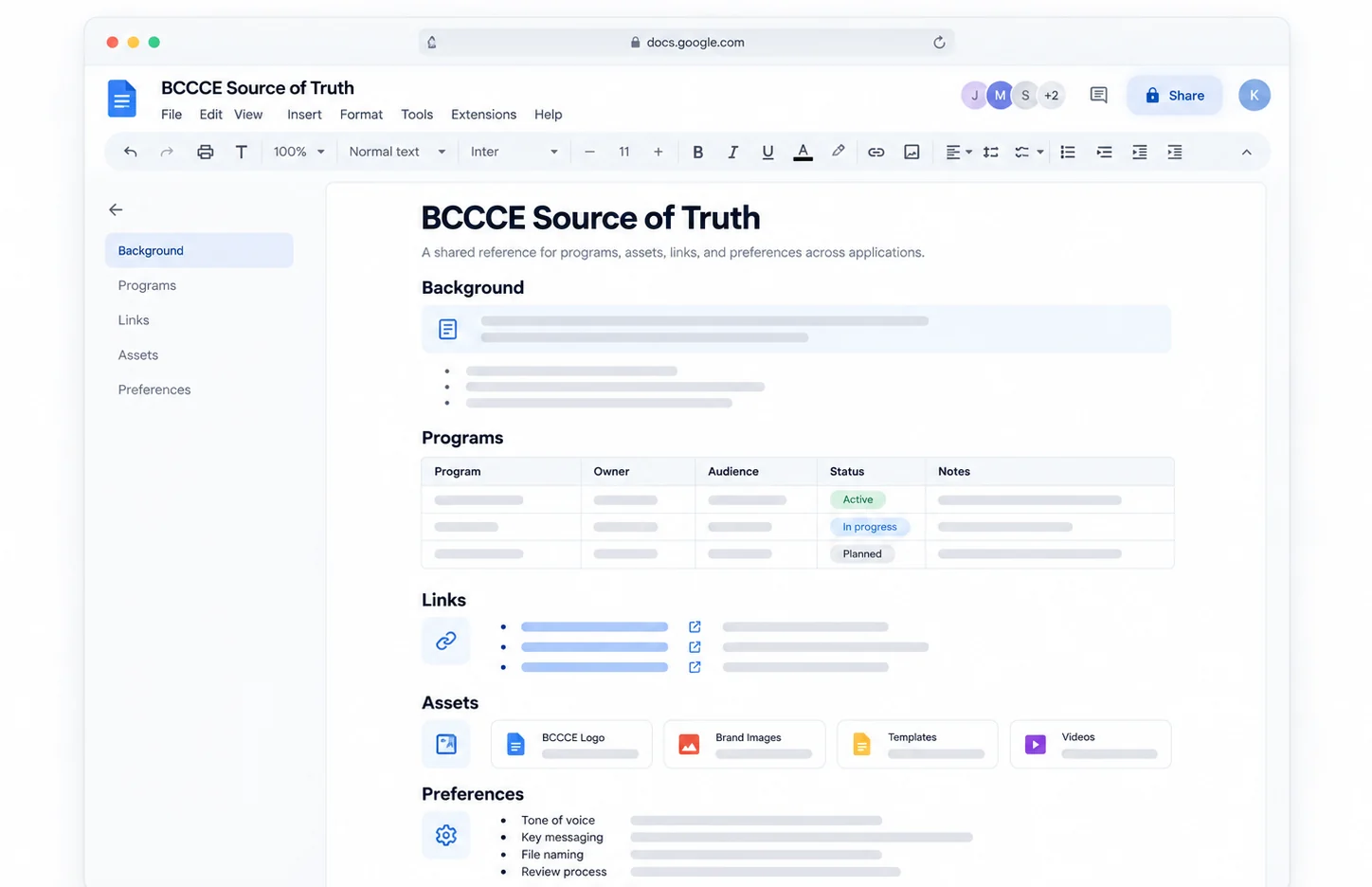
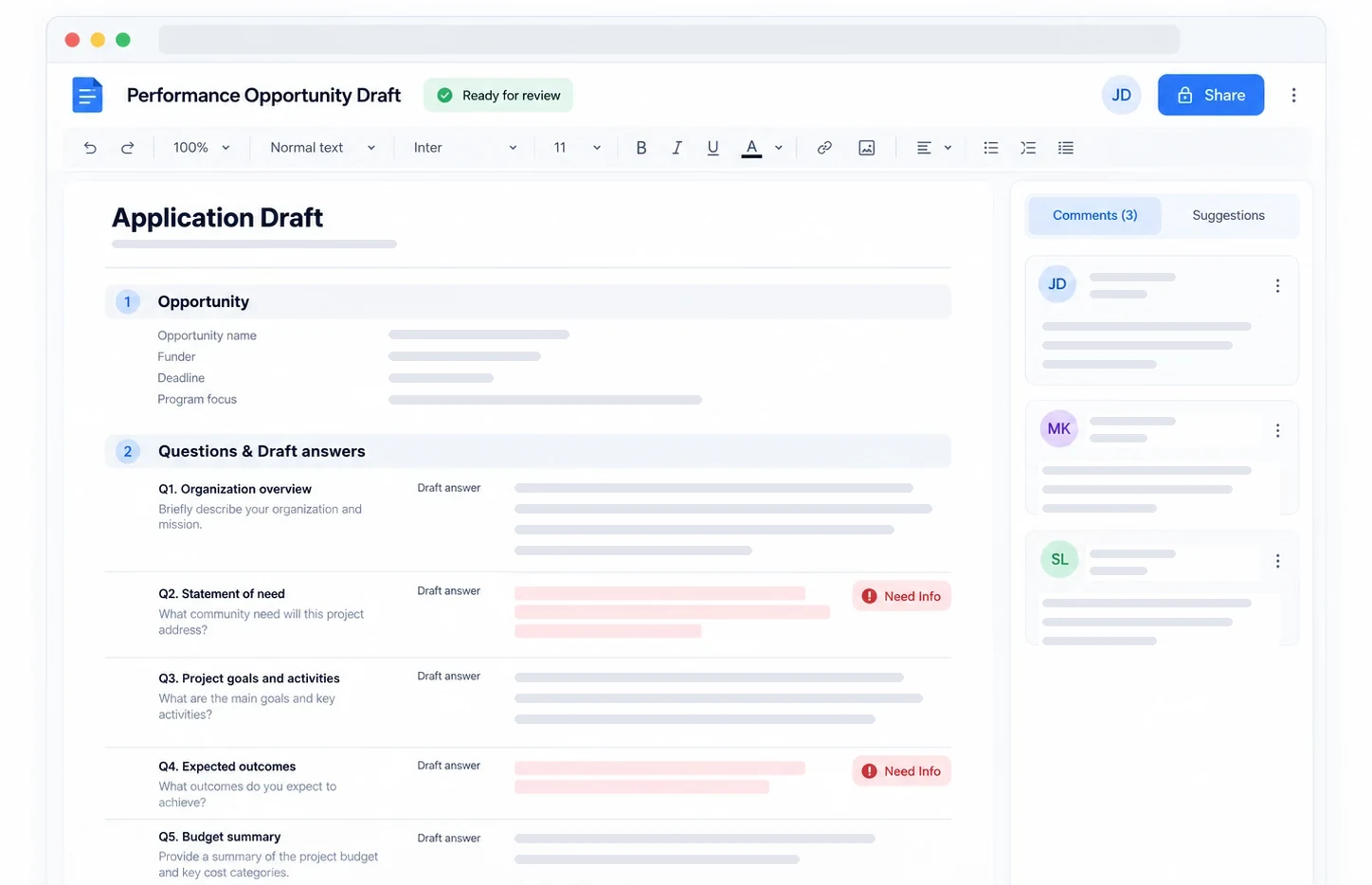
Application drafts pull from the same Source of Truth, helping keep recurring information consistent.
Case study
How I helped BC Chinese Chamber Ensemble bring opportunity research and application preparation into one shared workflow, while keeping final decisions with people.
Every opportunity worked differently, and nothing was tracked in one place
BCCCE members run the ensemble alongside their regular jobs, but opportunity research and application preparation took 6+ hours each week. Finding an opportunity was only the start: members still had to check fit, understand requirements, gather information, prepare answers and follow up.
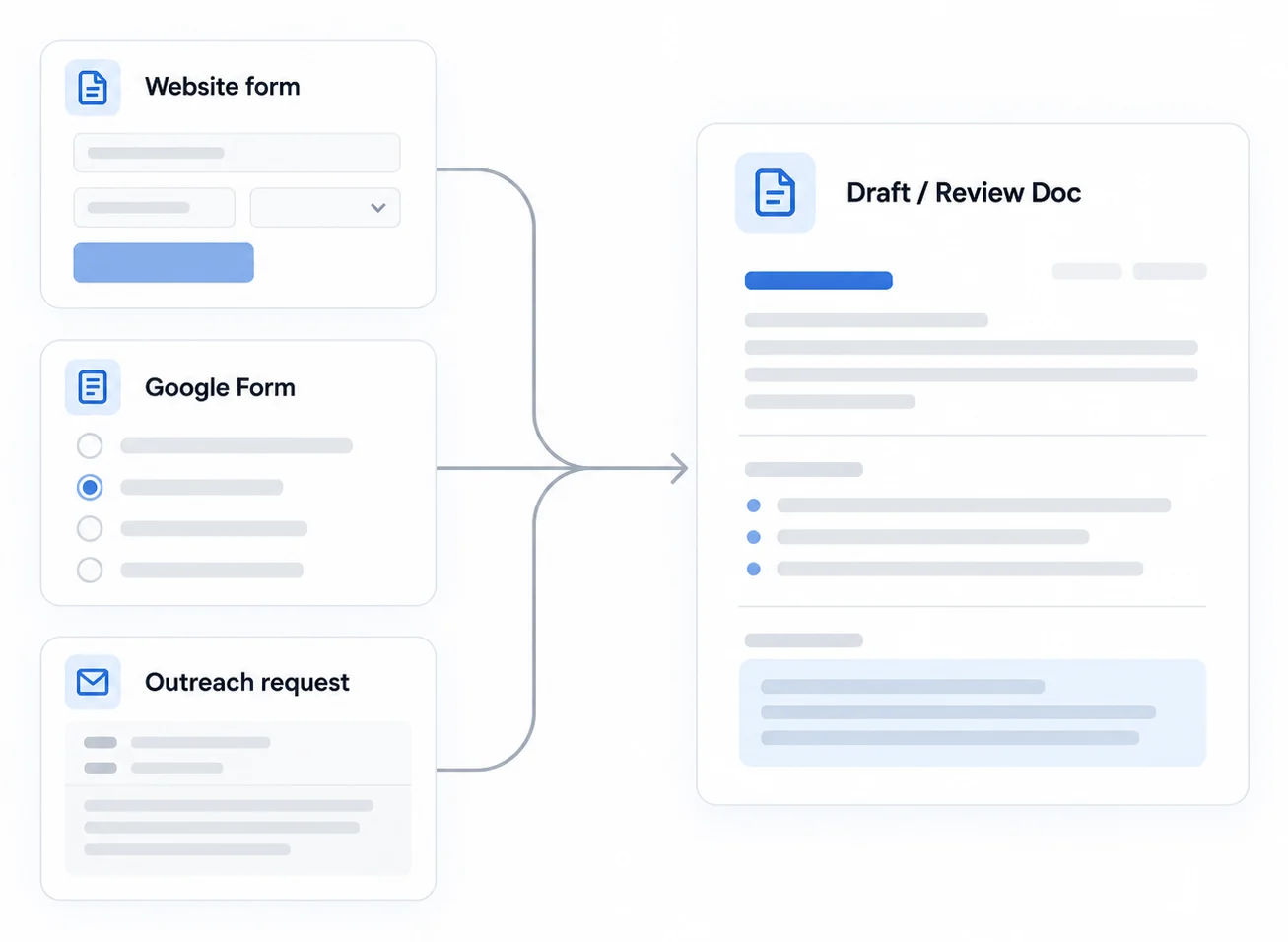
Applications came through website forms, Google Forms and direct outreach, with no shared place to see what had been found, drafted, submitted or followed up.
A recurring workflow built around BCCCE’s existing tools
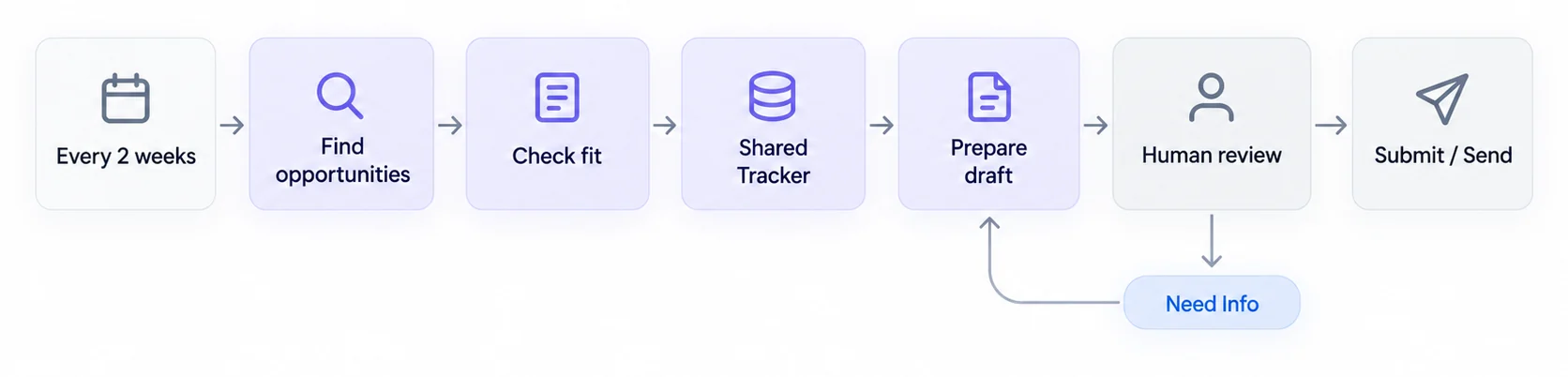
Every two weeks, the workflow searches for relevant performance opportunities across Metro Vancouver and Vancouver Island, checks them against BCCCE’s criteria, adds qualified opportunities to a shared Tracker, and prepares application or outreach drafts for member review.
The goal was not to automate the final decision or submission. It was to reduce the repetitive searching, checking and drafting around them, while keeping fit, missing information and final approval with the ensemble.
Application drafts pull from the same Source of Truth, helping keep recurring information consistent.
Website forms, Google Forms and outreach requests are converted into the same format for review.
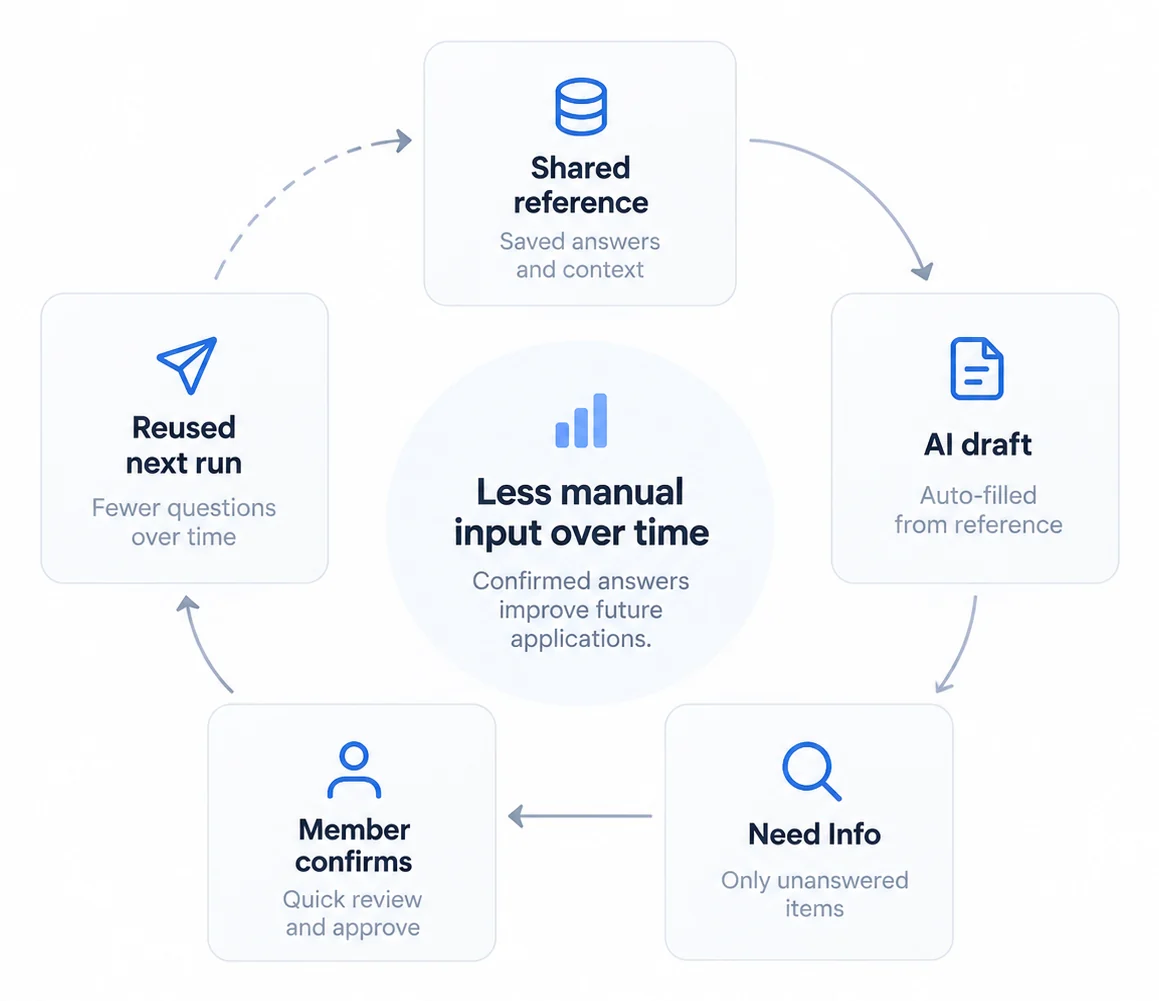
Approved answers are saved back to the shared reference, reducing repeated input over time.
Members review every draft, fill in missing information and decide what is ultimately submitted.
The same approach can apply anywhere a team repeatedly finds opportunities, checks fit and prepares materials, while people keep the final decision.
Monitor opportunities, check requirements and prepare response materials.
Find relevant programs, check eligibility and prepare application drafts.
Compare requirements and prepare submissions for review.
Automate the repetitive work Keep the decisions with people
The recurring search, screening and draft preparation were structured enough to automate, while fit, missing information and final approval stayed with the ensemble. This reduced admin work without removing the judgment that still needed people.